Unity
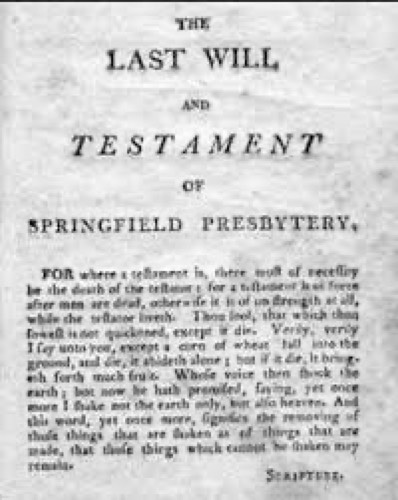
Expressed in an open table, in laying down our own authority (the Last Will and Testament, 1804), and in seeking connection with other Christians despite deep differences.
A curated tour of the Stone-Campbell Restoration Movement—its people, practices, and ideas—told with primary sources, timelines, and exhibits for the public, ministers, and researchers.
We wish, cordially wish, to take the New Testament out of the abuses of the clergy, and put it into the hands of the people.
And now, even now, if error was detected, how many who are lording it over the consciences of men, and rioting in insolent ease, would be divested of their influence and livings, and would sink down to their proper level in society.
In it [the one immersion] we put on Christ, are buried with him, rise with him, have our sins remitted, enter upon a new life, receive the Holy Spirit, and begin to rejoice in the Lord.
Four themes organize the site: unity, freedom of conscience, the priesthood of all believers, and God’s future.
Expressed in an open table, in laying down our own authority (the Last Will and Testament, 1804), and in seeking connection with other Christians despite deep differences.
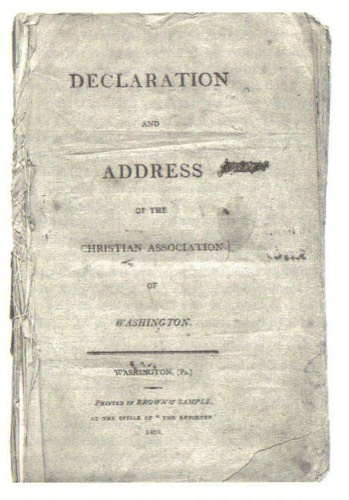
Freedom of conscience, connected to Aquinas, Luther, Zwingli and the Anabaptists. Thomas Campbell, in the Declaration and Address, sees it as essential to the nature of the church.
Practiced at Brush Run’s ordination, and in who may serve; often practiced more than proclaimed. Connected with the church’s deep tradition that affirms this priesthood, including Luther’s radical stance (yet limited practice).
God’s future calls us to embody the ultimate unity of the church here and now, and leads us to ask how best to practice and testify to it: the table, baptism, congregational singing, preaching, ordination and worship.
Secondary theme: Tradition. How the movement restates and deepens elements within the Christian tradition at large: a radical embrace of some of its deepest ideas and practices.
Key practices and ideas, presented with narrative, sources, and artifacts.
“Christians only, not the only Christians.”
Breaking bread as ordinary, participatory worship.
Agency, conscience, and allegiance to Christ.
Priesthood of all believers in one voice.
Founders, reformers, critics, and global voices.
Twelve primary documents — pamphlets, periodicals, a covenant, a letter and its reply — five of them readable here in full or in a reading edition.
Ways to teach this history, or dig in yourself — a full class, sourced quotations, and the movement’s colleges.
Our Wild Democracy — a history of ideas in thirteen chapters, each chapter linked to the people, events, and documents behind it.
Quotations from the movement's own voices, grouped by idea, person, and slogan, with the sources they come from.
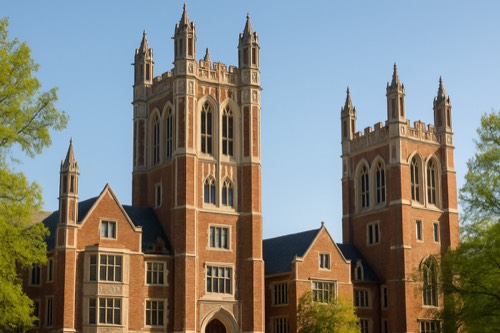
Nine institutions tied to the movement — Bacon College, Bethany, Transylvania, and the campuses carrying the tradition today.