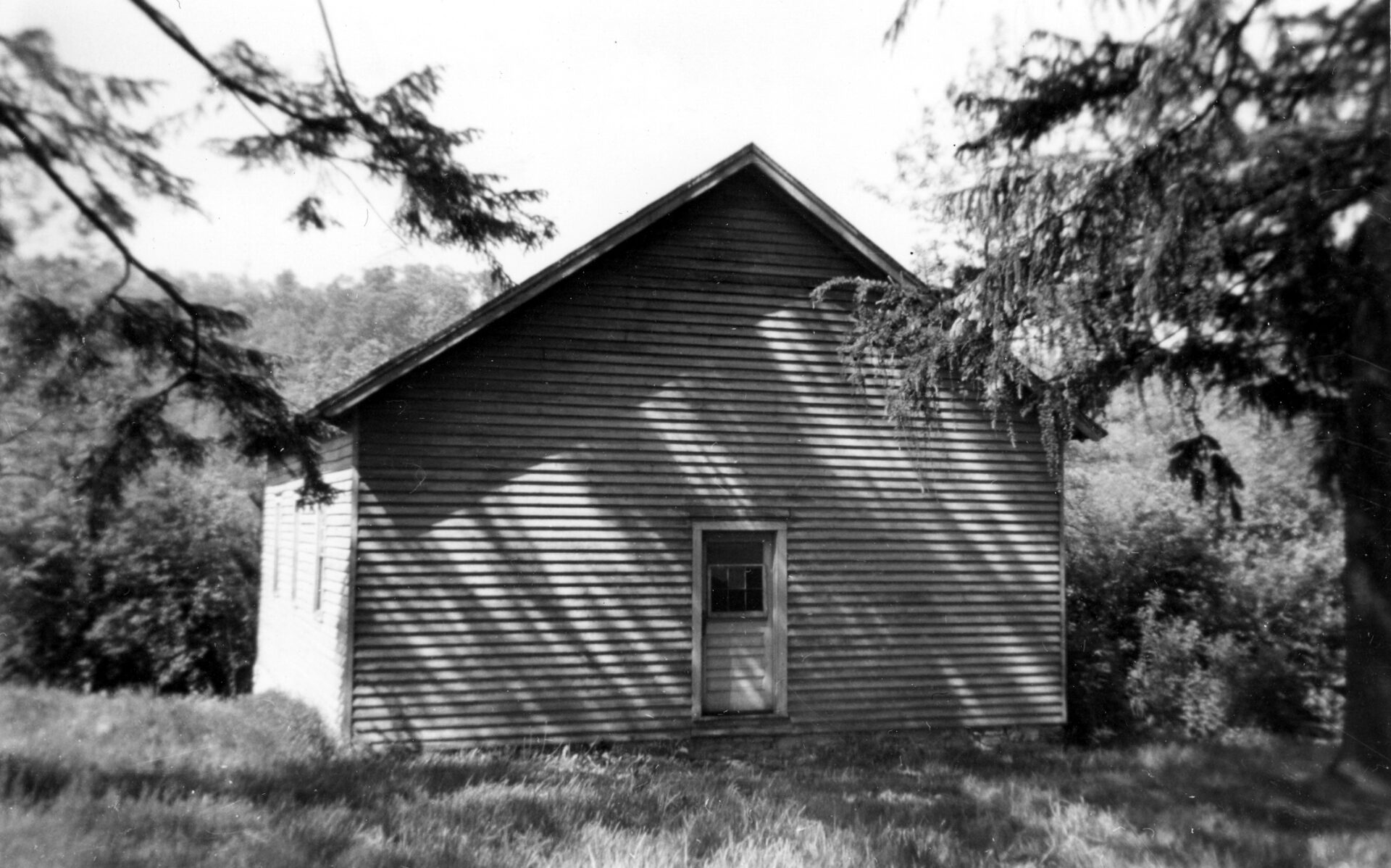
Founded on May 4, 1811, Brush Run Church was one of the earliest and most significant congregations of the Restoration Movement. The church grew out of the Christian Association of Washington, established by Thomas Campbell in 1809 following the publication of his groundbreaking Declaration and Address. When the Association reconstituted itself as a church, it built a meetinghouse on the farm of William Gilchrist near Brush Run creek, about two miles above its junction with Buffalo Creek. For nearly fifteen years, Brush Run served as the principal worship center for Thomas and Alexander Campbell's reform movement, where they developed and practiced many of the principles that would shape the Stone-Campbell Movement: believer's baptism by immersion, congregational governance, simple New Testament Christianity, and freedom from human creeds.
The Believer's Baptism Decision
A pivotal moment in the church's history came in June 1812. The birth of Alexander Campbell's first child on March 13, 1812, forced him to confront the question of infant baptism. After intensive Bible study, Alexander became convinced that infant baptism lacked New Testament support. This led to a watershed moment: on June 12, 1812, Thomas and Alexander Campbell, their wives, and three others were immersed by Baptist preacher Matthias Luce in Buffalo Creek on a simple confession of faith in Christ. This decision to practice believer's baptism by immersion would become a defining characteristic of the movement. Alexander Campbell delivered his first sermon on this site in September 1810, before the building was completed, using Job 8:7: 'Though thy beginning was small, thy latter end should greatly increase.'
Union with the Baptists (1813-1823)
Following their adoption of believer's baptism, the Brush Run congregation sought fellowship with like-minded groups. In autumn 1813, they applied to join the Redstone Baptist Association. They were accepted on condition that they 'be allowed to teach and preach whatever we learned from the Holy Scriptures, regardless of any creed or formula in Christendom.' This arrangement worked for several years, but tensions grew. Alexander Campbell's famous 'Sermon on the Law' in 1816, which argued for following the New Testament rather than the Old Testament, increased opposition within the Association. By 1823, facing potential heresy charges, Campbell and about thirty members withdrew to establish a new congregation in Wellsburg, which joined the more sympathetic Mahoning Association in Ohio. Most Brush Run members eventually transferred to Wellsburg, though services continued at Brush Run until about 1828.
The Meeting House Journey
The original Brush Run meetinghouse was a post-and-beam structure held together with wooden pins, built by John Boyd with help from congregation members. The building could be disassembled and moved—a feature that would prove significant. Never fully finished and no longer in regular use, the building was sold to George McFadden in 1842 and moved to West Middletown, Pennsylvania. There it served as a blacksmith shop, then as a post office when McFadden became postmaster in 1869. Later it was given to neighbor William Anderson and used as a barn. In 1909, inspired by the Centennial Convention in Pittsburgh, visitors initiated a program to reconstruct the meetinghouse using remaining timbers, moving it to the Campbell Homestead in Bethany, West Virginia. The structure eventually deteriorated, and its remains were removed in 1990. Today, the original Brush Run site is commemorated by a historic marker on the farm where the congregation first gathered.